Back to Archive

LA-AI Insights: A History of AI, Part 1

Your weekly AI news and updates from Lower Alabama

Friday, June 5, 2026

Share this newsletter:

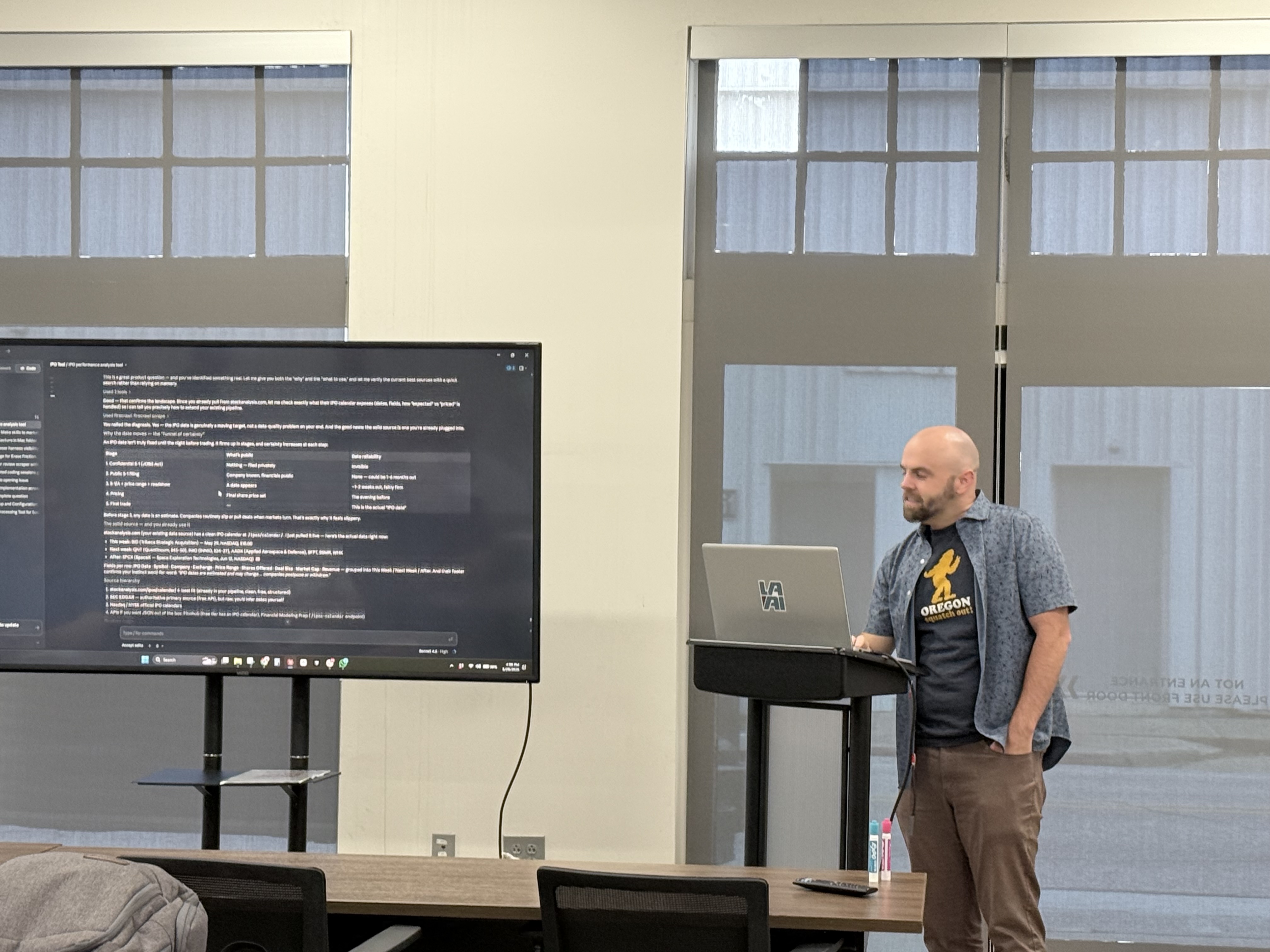
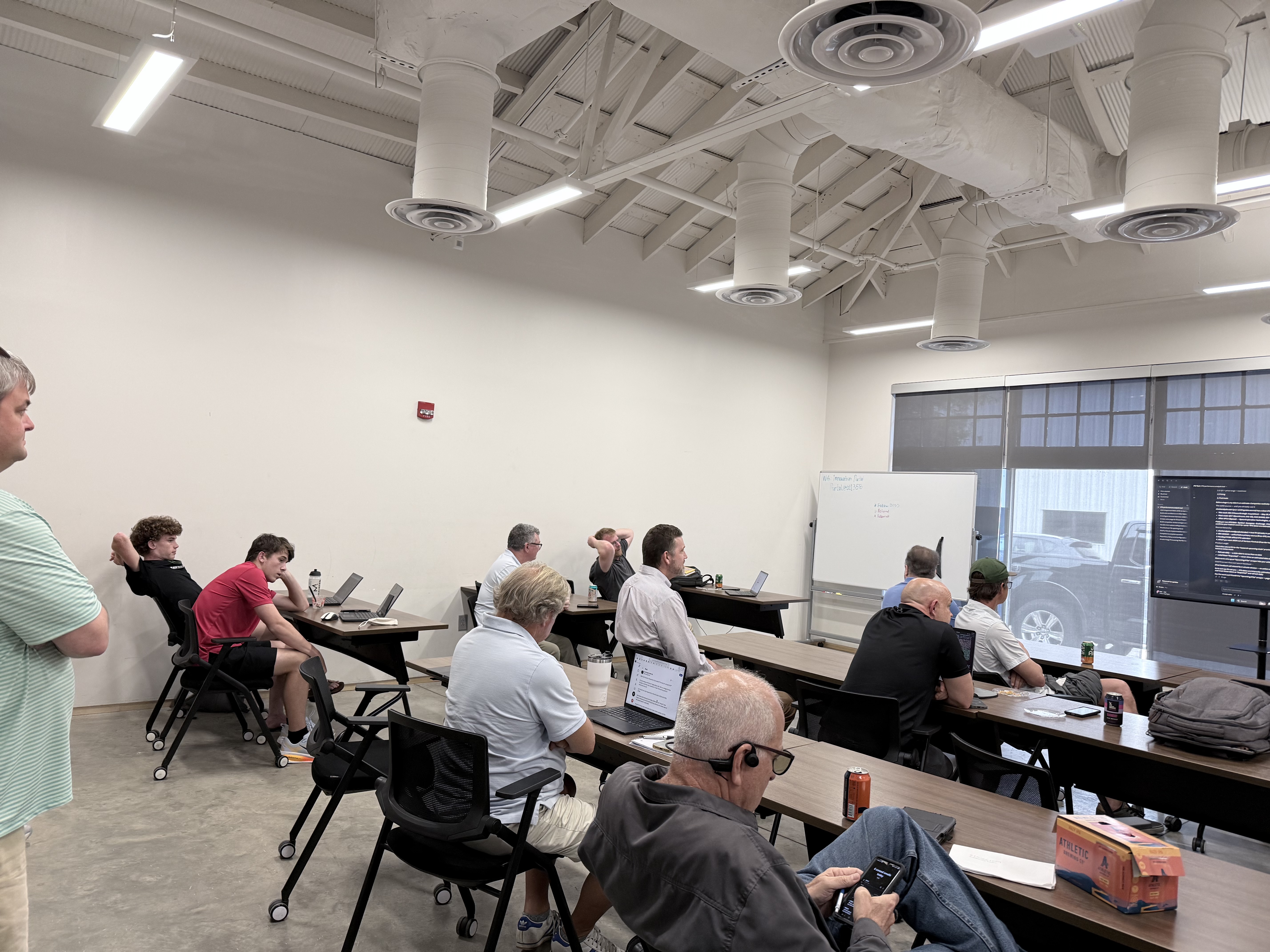
LA-AI Fairhope Meetup

<p>Join us at the LA-AI Fairhope Meetup. Friday, June 5th @3:30PM</p><p></p>


Today's newsletter is part one of a two-part series on the history of AI. At the pace AI is changing, I think it's important to take a moment every once in a while to reflect on how we got here. That is the goal of this two-part series.


The field of artificial intelligence is about seventy years old. It did not start with ChatGPT in 2022. It did not start with the smartphone. It started in 1956, when a powerful computer filled a room and a single one cost more than a house. For most of those seventy years, AI lived in places you never saw. University labs. Government defense projects. Specialized corporate hardware humming away in basements.

The big public moment most people remember is recent, but the story underneath it is long, and it is full of bold promises, hard failures, and quiet breakthroughs that nobody outside research even noticed at the time. This is part one of that story. It runs from the very beginning up to the week before AI showed up in everyone’s life. Researchers kept dreaming bigger than the available computers and data could deliver, and they kept hitting a wall, until the 2010s when that finally flipped.

The name came before the thing worked. In the summer of 1956, a small group of researchers gathered at Dartmouth College for a workshop. John McCarthy, Marvin Minsky, and a couple of others wanted to figure out whether machines could be made to use language, solve problems, and learn the way people do. The funding proposal they wrote the year before is credited as the first time the phrase “artificial intelligence” appeared in print.


McCarthy picked that name, and it stuck, even though several others in the room preferred alternatives. One preferred “automata studies.” Another pair liked “complex information processing.” McCarthy’s version won, and that single word choice permanently tied the whole field to a comparison with human thinking.

We have been asking “can machines think” ever since, partly because he named it that way, and you can still hear it echoed now in arguments about whether chatbots “understand” anything. They organized and named the field decades before the technology could actually do much of anything. The dream came first. The ability came much, much later.

The first hype cycle, right on schedule:  A couple of years later, a Cornell psychologist named Frank Rosenblatt built something called the perceptron. It was an early version of a neural network, which is a system loosely inspired by how brain cells connect and signal. The important thing about it was that it could learn and adjust on its own, which made it the direct ancestor of the AI we use today. It also kicked off the first round of AI hype, and the press responded the way it often does to new technology. After a 1958 Navy press conference, the New York Times reported that the perceptron was the early version of a computer that would one day walk, talk, see, write, and be aware of its own existence. It could do none of those things. It could barely tell shapes apart. That gap between the headline and the reality is going to come up again and again in this story. Around the same time, an MIT researcher built a program called ELIZA that imitated a therapist by matching keywords and bouncing questions back at you. It did not understand a single word you typed. But people pouring their hearts out to it became genuinely convinced it cared. That reaction got a name, the “ELIZA effect,” and if you have ever felt weirdly understood by a chatbot, you have felt it yourself. That was already true in 1966.

When the money dried up, twice. By the mid-1970s, the bills came due. Researchers had promised things like fluent machine translation and intelligent machines within a generation, and they had not delivered. Governments noticed. Funding got cut hard, first in Britain, then in the United States. This stretch is now called an “AI winter,” and it was severe enough that the term “artificial intelligence” became something of an embarrassment. Researchers who wanted to keep working quietly relabeled what they did as “machine learning” or “informatics” or just plain statistics, because attaching the words “artificial intelligence” to a grant application was a good way to get it rejected. Then it happened again. In the 1980s, companies had bet big on expensive specialized AI computers. Around 1987 that market collapsed, partly because ordinary workstations got cheap enough to do the same jobs. A second winter set in. Two major disappointments, two long droughts. By the end of the 1980s, AI had a reputation as the technology that was always five years away and never arrived.

The slow thaw, in public. The comeback was gradual, and the first signs of it played out as public spectacles built around games. In May 1997, IBM’s Deep Blue beat world chess champion Garry Kasparov in a six-game match. It was one of the first times huge numbers of people watched a machine beat the best human alive at something we think of as deeply intellectual. But Deep Blue did not understand chess the way Kasparov did. It was not thinking. It was searching through enormous numbers of possible moves incredibly fast and picking the best one. Brute force, not insight. That distinction matters, because a similar “but does it actually understand” question hangs over today’s systems too. Almost twenty years later, in March 2016, the story got stranger. A program called AlphaGo, built by a lab called DeepMind, beat one of the world’s top players at Go, an ancient board game with so many possible moves that experts had long assumed computers could not crack it. An estimated 200 million people watched, mostly across East Asia. And unlike Deep Blue, AlphaGo did something striking. It played moves no human would have thought of, strategies that looked like mistakes until they turned out to be brilliant. This was not just fast searching anymore. The system was discovering strategies that surprised even the experts who built it.

The breakthrough you never heard about. Between those two game matches sits the single most important moment in this entire story, and almost nobody outside research noticed it when it happened. In 2012, three researchers from the University of Toronto entered an image-recognition contest with a neural network they called AlexNet. They trained it on two ordinary gaming graphics cards, the same kind of graphics processing units that render video games. It did not just win. It crushed the competition, cutting the error rate so dramatically that the whole field changed direction almost overnight. Why did it work in 2012 when the same basic ideas had flopped for decades? Two things had finally caught up to the dream. There was now enough data to train on, thanks to the explosion of digital images online. And those gaming graphics chips turned out to be perfect for the kind of math neural networks need. The ambition had been right all along. The hardware and the data just had to arrive. After AlexNet, companies like Google and Facebook pivoted hard toward AI, and within a few years you started seeing the payoff in everyday life. Photo apps that could tag your friends’ faces. Phones you unlocked by looking at them. Voice typing that mostly worked. You used the results constantly without ever hearing the name AlexNet. That is the pattern in a nutshell. 

The translation paper that changed everything. There is one more piece to put in place before the story arrives at your front door, and like the others, it came disguised as something boring. In 2017, eight researchers at Google published a paper about a better way to translate languages. They called their design the “Transformer.” On the surface it was a narrow technical improvement. Underneath, it became the foundation that nearly every modern language model would use. The old approach read text one word at a time, slowly. The Transformer could take in a whole stretch of text at once and weigh how every word related to every other word. That made it efficient enough to scale to enormous sizes, which is exactly what the next few years would demand. If you have ever wondered what the “T” in “GPT” stands for, this is it. From there, the pieces came together quickly, though still entirely out of public view. A series of increasingly capable language models got built and scaled up, each one bigger than the last. 

Then, in early 2022, researchers worked out a crucial finishing step. They figured out how to train these models to actually follow a person’s instructions and give helpful answers, rather than just predicting likely text. People rated the model’s responses, and those ratings were used to steer it toward being useful and less likely to say something awful. That last step was the quiet hinge. It turned an impressive but unpredictable research tool into something an ordinary person could just talk to. By the fall of 2022, every ingredient was available. The architecture. The scale. The training method. Decades of ambition, two winters survived, and a string of breakthroughs that the public had mostly not seen. And then, on November 30, 2022, somebody opened the door and let everyone in.

That is where part two begins (next week)


Upcoming Events

Invalid Date

Magnolia Building (314 Magnolia Ave., Fairhope)

This Week in AI

1. AI needs a 'brake pedal', warns Anthropic co-founder

An Anthropic co-founder is publicly calling for mechanisms to slow or halt AI development if safety thresholds are breached — framing the issue as needing a 'brake pedal' rather than just guidelines. Coming from one of the field's leading safety-focused labs, this statement carries strategic weight beyond typical AI ethics commentary. It signals that even organizations at the frontier believe current governance mechanisms are insufficient relative to the pace of capability development. For business leaders and policymakers, this represents a credible internal voice raising structural concerns about industry self-regulation capacity.

BBC NewsRead more

2. Canada unveils $2.3bn AI strategy as Carney takes cues from Pope Leo on safety

Canada has announced a $2.3 billion national AI strategy under Prime Minister Carney, explicitly framing the investment as a response to U.S. trade uncertainty and positioning Canada as an independent AI power. The strategy's notable safety framing — referencing Pope Leo's ethical guidance — suggests a regulatory philosophy closer to the EU's risk-based approach than the current U.S. permissive stance. For AI companies operating across North America, this introduces a new significant national framework that will shape data governance, compute investment eligibility, and procurement rules in a major G7 economy.

The Next WebRead more

3. ChatGPT now saves narrative dossiers about you sorted by work, hobbies, and travel preferences

OpenAI has rolled out a memory update to ChatGPT that now builds structured, narrative-style user profiles organized by life domains including work, hobbies, and travel — a significant evolution beyond simple fact-storage memory. This represents a shift toward persistent user modeling at scale, with meaningful implications for personalization effectiveness, data privacy exposure, and regulatory scrutiny under frameworks like GDPR. For enterprise AI buyers and privacy professionals, this development raises questions about data retention policies, user consent architecture, and how deeply conversational AI systems should be permitted to model individual users over time.

The DecoderRead more

4. Alphabet just raised $85 billion for AI, smashing the largest equity offering in history

Alphabet has completed an $85 billion equity raise specifically earmarked for AI development, breaking the record for the largest equity offering in history. This signals an unprecedented scale of capital commitment to AI infrastructure and research at the highest tier of the industry. For AI professionals and business leaders, this move resets expectations around compute investment, talent acquisition, and the pace of frontier model development. Competitors and partners alike will need to reassess their own capital strategies as Google deepens its structural financial advantage in the AI race.

The Next WebRead more

5. Google's new Gemma 4 12B model is designed to run on any laptop with 16GB of RAM

Google DeepMind has released Gemma 4 12B, a multimodal open model with native audio support that operates on standard consumer hardware with just 16GB of RAM. The encoder-free architecture represents a meaningful technical advance in model efficiency, enabling edge and on-device deployment without cloud dependency. This has direct implications for enterprise privacy-sensitive deployments, offline AI applications, and developer accessibility. By packaging frontier-level multimodal capabilities into a laptop-compatible footprint, Google is expanding the practical deployment surface for open-weight AI significantly beyond what was achievable just months ago.

Ars TechnicaRead more

6. Microsoft used agentic AI to make its quantum chip 1,000 times more reliable, then cut its timeline to a scalable quantum computer in half

Microsoft reports its Majorana 2 quantum chip is 1,000 times more reliable than its predecessor — and that agentic AI systems played a direct role in the materials science discoveries that enabled this leap. Equally significant, Microsoft has cut its internal timeline to a scalable, fault-tolerant quantum computer in half as a result. This is a rare case where AI is actively accelerating the development of the next wave of compute infrastructure. The convergence of agentic AI and quantum hardware R&D represents an emerging and strategically important frontier for the industry.

The Next WebRead more

Community Highlights

A great crowd at LA-AI Mobile

A great crowd at LA-AI Mobile

The one-and-only Brooks Conkle showing off his skills!

The one-and-only Brooks Conkle showing off his skills!

Know someone who would enjoy this newsletter?

Forward this email or share the link below

https://la-ai.io/newsletter/view/2026-06-05
Subscribe to LA-AI Newsletter

Join Our AI Community

Get weekly insights on AI innovations and exclusive updates on LA-AI events

Subscribe Now